Introduction
Have you ever noticed how the edge of a swimming pool can transform its entire look and feel? Much like a picture frame that enhances a beautiful painting, pool coping defines the aesthetic and functionality of your pool. It’s not just about looks—coping plays a crucial role in protecting your fiberglass pool from water damage, ensuring safety, and elevating the overall design.
Yet, many homeowners assume that coping is purely decorative. In reality, it serves as a barrier against water infiltration, helps prevent wear and tear on your pool shell, and provides a safe, slip-resistant surface for swimmers.
In this guide, we’ll explore the four most popular types of pool coping, from modern pool coping styles to timeless, elegant options. Whether you’re looking for affordability, durability, or a high-end finish, we’ll break down the benefits, costs, and best applications to help you choose the perfect fit.
What Is Pool Coping and Why Does It Matter?
Definition and Function
Pool coping is the material that caps the edge of your pool, creating a smooth transition between the pool and the deck. Its primary functions include:
- Preventing Water Damage – It directs water away from the pool shell, reducing the risk of structural damage.
- Enhancing Safety – Many coping materials provide a non-slip surface, making the pool area safer for swimmers.
- Boosting Aesthetic Appeal – Coping frames the pool, enhancing its overall look and complementing the surrounding landscape.
Factors to Consider When Choosing Pool Coping
Selecting the right coping material depends on several key factors:
- Budget – Costs vary from budget-friendly concrete to luxurious natural stone.
- Aesthetic Preference – Do you prefer sleek, modern pool coping or a more rustic, elegant look?
- Maintenance Requirements – Some materials require sealing, periodic cleaning, or additional upkeep.
1. Cantilevered Concrete Coping
Description
Cantilevered concrete coping is a seamless, modern option where concrete is poured to extend over the pool’s edge, creating a smooth, rounded finish. The bull-nosed edge provides a soft, curved appearance that blends effortlessly with the pool deck.
Benefits
- Cost-Effective – One of the most affordable options, typically ranging from $6 to $10 per linear foot.
- Sleek and Contemporary – Ideal for those looking for modern pool coping that integrates seamlessly with minimalist designs.
- Durability – Resistant to various weather conditions and pool chemicals, ensuring longevity.
Considerations
- Requires Skilled Installation – Achieving a flawless finish demands professional expertise.
- Limited Design Variation – Unlike pavers or stone, concrete offers fewer customization options.
2. Paver Coping
Description
Paver coping consists of pre-cast concrete pavers installed around the pool, either bonded to the shell or set on a mortar bed. These pavers often feature bull-nosed edges, creating a polished, refined aesthetic.
Benefits
- Easily Replaceable – If a paver gets damaged, you can replace it without disturbing the entire perimeter.
- Uniform and Controlled Appearance – Creates a structured, cohesive aesthetic that complements many pool styles.
- Moderate Cost – Prices typically range from $40 to $50 per linear foot.
Considerations
- Higher Cost Than Concrete – While more customizable, pavers are a premium upgrade compared to cantilevered concrete.
- Requires Precise Installation – Proper alignment and bonding are essential to maintain a seamless look over time.
3. Travertine Coping
Description
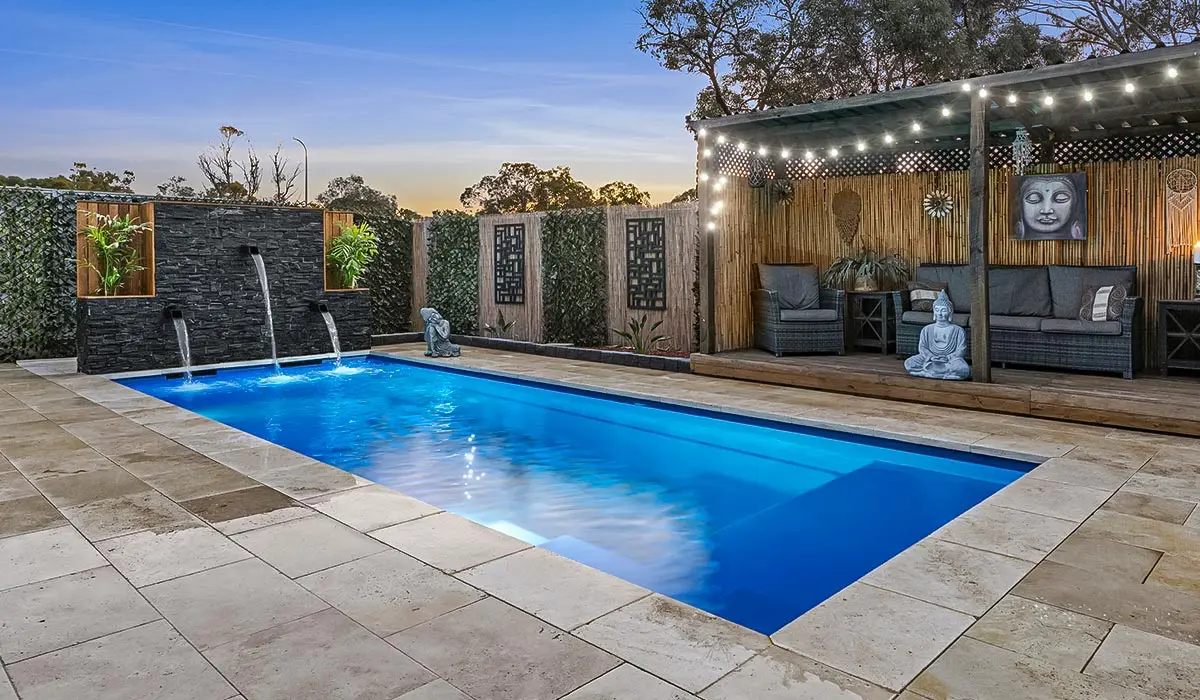
Travertine coping, made from natural travertine stone, offers a luxurious, marble-like finish. Available in warm, neutral tones, it complements both modern and traditional pool designs.
Benefits
- Cool to the Touch – Unlike concrete, travertine remains cool even under the hot sun, making it perfect for bare feet.
- Slip-Resistant – Enhances safety, especially for families with children.
- Timeless Elegance – Adds a high-end, sophisticated aesthetic to any pool.
Considerations
- Premium Pricing – Costs range from $45 to $55 per linear foot.
- Requires Sealing – Helps maintain its natural beauty and prevents staining.
4. Bluestone Coping
Description
Bluestone coping is crafted from high-quality natural bluestone, offering a rich, organic aesthetic. It’s available in various shades, from deep blue to earthy tones, adding a unique touch to your pool area.
Benefits
- Non-Slip Surface – Ensures safety in wet conditions.
- Versatile Appearance – Complements both modern pool coping styles and traditional landscapes.
- Durable and Weather-Resistant – Withstands harsh conditions without losing its appeal.
Considerations
- Similar Cost to Travertine – Typically $45 to $55 per linear foot.
- May Require Sealing – Helps preserve its natural color and texture over time.
Choosing the Right Pool Coping for Your Fiberglass Pool
Key Factors to Weigh
- Budget – Concrete is the most affordable, while travertine and bluestone are premium options.
- Aesthetic Goals – Do you prefer a modern pool coping style or a classic, rustic look?
- Maintenance Commitment – Some materials require more upkeep than others.
Expert Recommendation
Consulting with a professional pool installer ensures your coping choice aligns with both your design vision and functional needs. An expert can guide you through the selection process, ensuring durability, safety, and visual harmony with your poolscape.
Final Thoughts
Recap of the 4 Most Popular Types
- Cantilevered Concrete – Affordable and modern.
- Paver Coping – Versatile with easy replacement.
- Travertine Coping – Elegant, cool to the touch, and slip-resistant.
- Bluestone Coping – Durable, stylish, and available in various shades.
Ready to enhance your fiberglass pool with stunning coping? Contact us today for expert guidance and professional installation.